25. Let’s Talk About Money!

Updated: Jul 11

Hey everyone! It's the beginning of second semester, and so far this blog has mostly been about non-fiction materials such as AIs, propagandas, persuasive skills, and writing speculative fictions. Today, we take a detour and talk about money. Not the coins in your pocket, but the giant invisible forces that decide how much your snacks cost, why your parents sigh at the gas station, and why adults on the news keep saying words like "the Fed" with very serious faces.
Last year in 2025, I wrote a similar post for the classes that came before you. Those students learned the basics of macroeconomics, and then each class invested $50 of real money in the markets to grow a December snack fund. I'm planning to start this as my class tradition.
I'm pretty sure you guys remember when we did Investing/Trading Simulator (Market Manipulation) where you tried out paper trading. That was just practice. Today, we’re moving one step closer to the real thing.
This year, the financial world lost its mind. A war that broke out. A comeback by inflation. A new captain at the world's most powerful bank. And most recently, a Korean company is making Wall Street history. You have been living inside one of the wildest stretches in modern financial history for six months.
The Crash Course: Four Ideas You Need First
Interest rates are the price tag of money. When rates are high, borrowing money is expensive, so people and companies spend less. When rates are low, borrowing is cheap, so people spend more and take bigger risks. Almost everything else in economics flows from this one idea.
Inflation is the silent shrinker. Inflation means prices rising over time. Korea's inflation is currently 3.2%, which means a ₩10,000 bento today will cost about ₩10,320 next year. Your money still looks the same. It just buys less. That is why adults get emotional about a number that sounds small.
The Fed is the captain of the world's money ship. The U.S. Federal Reserve, "the Fed," is America's central bank, and it sets American interest rates. Because the U.S. dollar powers global trade, the Fed's decisions send waves from New York to Seoul. The basic playbook: when inflation runs too hot, the Fed raises rates to cool spending down. When inflation settles and jobs weaken, it cuts rates to warm things back up. Korea has its own captain too, the Bank of Korea, running the same playbook in won.
Investors swing between risk-on and risk-off. When investors feel brave (risk-on), they buy things that can rise fast: tech stocks, crypto, apartments. When they feel scared (risk-off), they hide in things that hold value: gold, government bonds, U.S. dollars.
That is genuinely most of macroeconomics. Everything on the financial news is these four ideas on different shades.
The Crash Course: Four Ideas You Need First
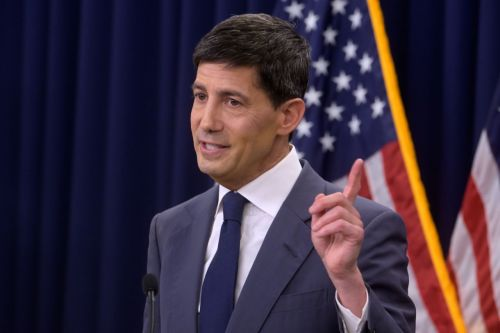
The money ship changed captains this spring. Jerome Powell, who led the Fed for eight years, finished his term as Chair. In May, Kevin Warsh took over, and on June 17 he ran his first big meeting. The result: rates stayed frozen at 3.50% to 3.75% for the fourth meeting in a row.
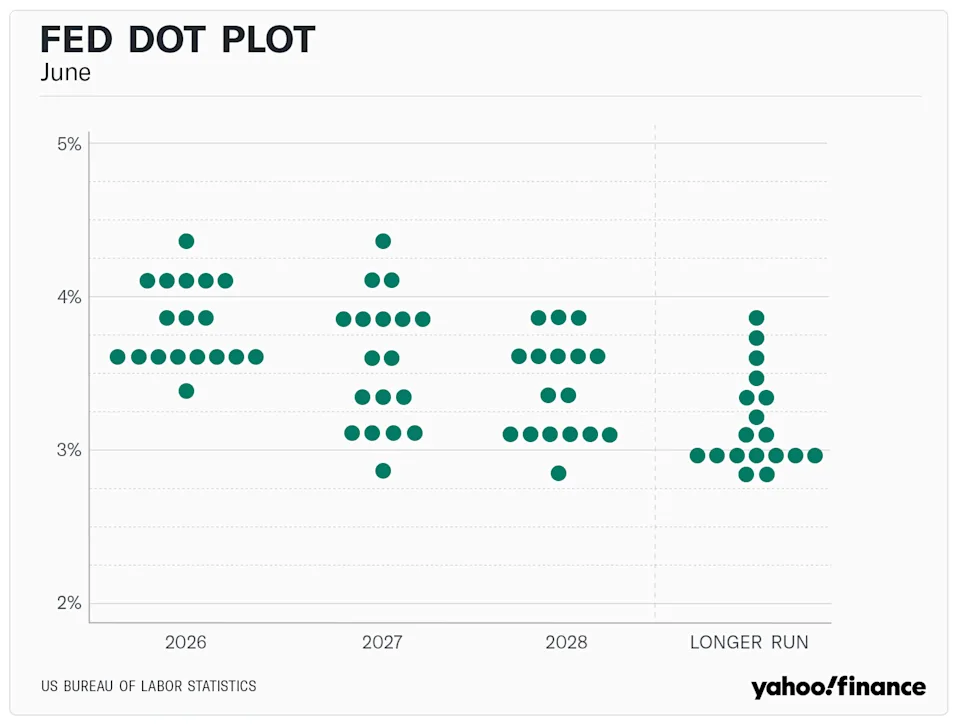
But the Fed's famous "dot plot" told a louder story. The dot plot is a chart where each Fed official secretly marks where they think rates should go. In June, nine of the eighteen officials marked at least one rate increase before the year ends, and markets are now betting the same way.
Why would anyone raise rates on purpose? Because it is the medicine for inflation. Expensive borrowing means less spending, and less spending eventually slows price increases. Bitter, but it works.
Here is the uncomfortable part, though. Rate hikes fight inflation caused by too much spending. This inflation was partly caused by a war choking off oil supply, and no interest rate on Earth can reopen a sea strait. Keep that tension in your head. It leads straight to our new vocabulary.

The Story of the Past Ten Months
Here is the story of the past ten months, in four short chapters. You lived through most of it. You just did not have the words for it yet.
Chapter 1: The party. Last September, the Fed cut interest rates, then cut twice more before the end of 2025. Cheap money made investors brave. Stocks climbed, crypto climbed, and gold went on a historic run, peaking at about $5,600 per ounce at the end of January. An all-time record. If your grandmother owns a gold ring, it had its greatest moment in history this winter.
Chapter 2: The shock. In late February, about a month after you walked into my class for the first time, war broke out between the United States and Iran. Fighting spread to the Strait of Hormuz, a narrow strip of sea that carries roughly one fifth of the world's oil. Suddenly, moving oil around the planet became dangerous and expensive, and the price of almost everything that travels by ship, truck, or plane started creeping up.
Chapter 3: Inflation strikes back. Expensive oil works like a tax on the whole world. American inflation, which was 2.9% last September, hit 4.2% in May, the highest in more than three years. Korea's went from 1.7% to 3.2%, the highest in two and a half years. In both countries, oil products now cost over 20% more than a year ago. Your parents noticed at the gas station. So did you, probably, even if nobody explained why it was happening.
Chapter 4: The reversal. Go back to crash course idea number three. When inflation runs too hot, central banks raise rates to cool it down. That is exactly where the world stands right now. The Fed has not touched rates since December, and at its June meeting, half of its policymakers said the next move might be a hike, not a cut. One year ago the big question was "how many more cuts?" Today the question is "when is the hike?"
Same lever, opposite direction.
New Words for a New Year
Five terms that 2026 practically forced everyone to learn. Use one at dinner tonight and watch your parents' reaction.
Supply shock. Prices can rise for two reasons: people want to buy more (demand), or the stuff itself becomes harder to get (supply). A war that threatens one fifth of the world's oil is a classic supply shock. Central banks hate supply shocks, because their main tool, interest rates, works on demand, not supply.
Hawkish vs. dovish. Economists sort central bankers into birds. Hawks want higher rates to attack inflation. Doves want lower rates to protect jobs and growth. Last year's Fed was dovish. This year's Fed sounds distinctly hawkish. Listen for these words on the news. You will hear them constantly now.
Stagflation. The scariest word in economics: prices rising while the job market weakens, so families get squeezed from both sides at once. Right now, U.S. inflation is 4.2% while June job growth came in at just 57,000 new jobs, far below expectations. That is not full stagflation yet, and it may never get there, but economists are watching with the same face you make before opening a test score.
Currency depreciation. The Korean won had a rough year. Early this month it touched about 1,555 won per dollar, its weakest level since 2009, before recovering a little. A weaker won means the same 10,000 won buys fewer dollars, so anything priced in dollars gets more expensive for us: oil, overseas trips, imported sneakers, and yes, games and app purchases. You will meet this idea again in the challenge rules below.
Drawdown. A drawdown is how far something has fallen from its peak. Bitcoin hit a record of about $126,000 in October and trades near $63,000 as I write this. That is a 50% drawdown. Gold peaked around $5,600 in January and now sits near $4,100, though it is still up over 20% compared to last year. The lesson: an asset does not need a disaster to fall. Prices that rise fast on excitement can fall fast when the excitement fades.
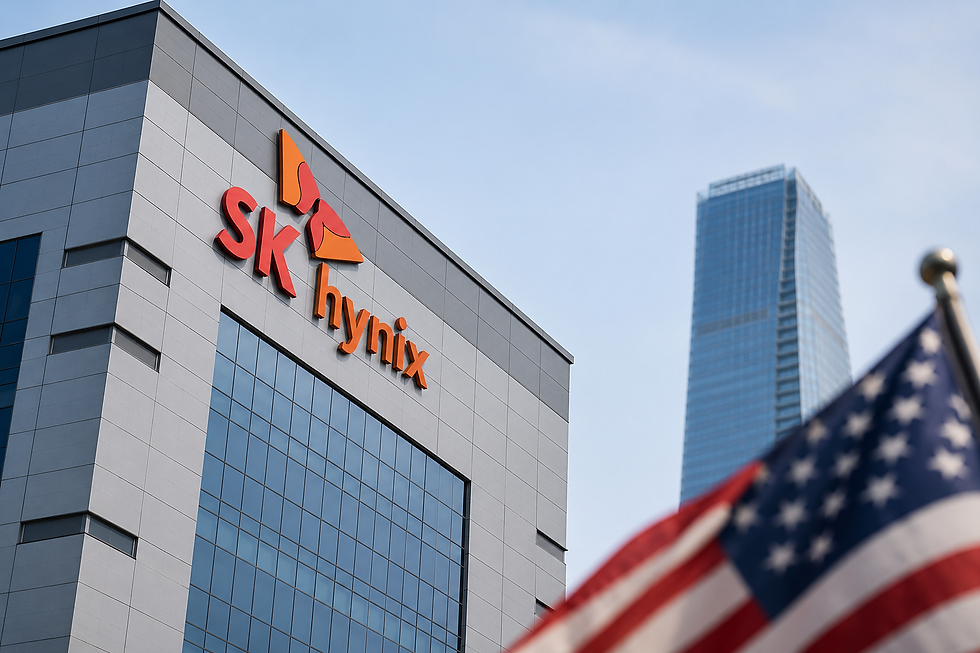
The Home Team Headline: SK Hynix Lands on the Nasdaq
This morning in New York, SK Hynix began trading on the Nasdaq under the ticker SKHY. The company raised about $26.5 billion, making it one of the largest share sales in history, second only to SpaceX's giant IPO last month. Investor orders reportedly came in at around seven times the available shares.
Why is the whole financial world obsessed with a Korean memory chip company? One acronym: HBM, high bandwidth memory. These are ultra-fast memory chips stacked like tiny apartment buildings, sitting right next to the processors inside AI data centers. No HBM, no ChatGPT, no Claude, no AI anything. SK Hynix makes roughly 60% of the world's supply, and its biggest customer is Nvidia. Demand is so extreme that the company's stock has risen well over 200% this year, and its total value crossed one trillion dollars.
One more number, and it teaches a real lesson. Samsung Electronics and SK Hynix together now make up more than 40% of Korea's entire Kospi stock index. Economists call this concentration risk: when two companies are almost half the market, the whole market catches a cold when they sneeze. We saw it this very week, when chip profit-taking and fresh Middle East tension knocked the Kospi down more than 5% in a single day.
Korea's export machine, meanwhile, is running hot. In May the country posted a record current account surplus, with semiconductor exports up 167% from a year earlier. The world cannot stop buying Korean chips. Some of your parents probably work somewhere in that supply chain, which is worth remembering the next time someone tells you macroeconomics is far away from real life.

Why This Matters to You
Transport prices in Korea are up about 11% over the past year, mostly because of fuel. Bus fares, taxis, and delivery costs leak into the price of everything, including your fried chicken order.
The weak won makes anything dollar-priced more expensive: family trips abroad, imported gadgets, in-game purchases. When you hear "the won fell today," that is not abstract. It is your Steam wallet.
If the Fed hikes and other central banks follow, loans get more expensive. Families with mortgages, home loans that get repaid monthly for years, feel it first, because a higher rate means a bigger monthly payment and less left over for everything else.
The chip boom cuts the other way, in Korea's favor. Booming exports support jobs, salaries, and the stock accounts your parents check at dinner. One country can have painful inflation and a historic export boom at the same time. Economies are complicated like that.

Final Takeaway
Here is what this year taught better than any textbook: nobody knows the future. Not you, not me, not the professionals in expensive suits. Last September, almost everyone expected more rate cuts, cheaper money, and a smooth 2026. Then one conflict in one narrow sea lane rewrote every forecast on the planet.
The point of learning macroeconomics is not to predict the future. It is to understand the present fast enough to stay calm while everyone else is panicking. That skill will pay you back for the rest of your life, whether or not you ever buy a single stock.
Three things to watch this month, if you want to feel like a real analyst: the U.S. inflation report on July 14, the Bank of Korea's rate decision on July 16, and how SK Hynix's new American shares trade in their first weeks.

Class Investment Challenge: Grow the Snack Fund! 💰
Here’s the fun part. Each class (SM1, SM2, ST1, ST2, SW1) will get $50 (~₩75,000) to invest in an asset of their choice. That’s a total investment pool of $250 (~₩375,000) we’ll try to grow for December’s Snack Fund.
Your class may also use leverage up to 5x (five times). Leverage means betting bigger than the money you actually have, so it multiplies your gains AND your losses. With 5x leverage, a 2% rise becomes a 10% gain, and a 2% drop becomes a 10% loss. Before you get excited, remember what this spring did to over-confident bitcoin traders. Multiplying a loss by five is a fast way to turn a snack party into a rice-cracker party.
All positions should be closed by Saturday, December 5th, and we will celebrate with a snack party or gift cards (or a quiet meal of reflection, depending on the results) during the last week of December.
Bonus Alert: the first-place class, the one with the biggest gains, gets an extra boost added to their snack fund.
Your Task in the Blog Comments
In the comments below, write a short investment pitch for your class. You may ONLY choose one asset from the tradeable list below. No outside assets are allowed.
Your comment should include:
Which asset your class should pick (choose from the list below).
Your position: buy/long (bet it will rise) or sell/short (bet it will fall).
Your reason with a short explanation (why this trade will help your class grow the snack fund by December).
Homework Examples
Example 1 📈
Asset: SK Hynix
Position: Buy/Long
Reason with explanation: Our class should buy SK Hynix because AI data centers cannot work without HBM memory chips, and SK Hynix makes more of them than any company on Earth. Demand is sold out years in advance, and its brand-new Nasdaq listing means American investors can finally buy the stock easily, which could push the price higher. This will help our class grow the snack fund by December.
Example 2 📉
Asset: U.S. Crude Oil / WTI
Position: Sell/Short
Reason with explanation: Our class should short crude oil because its price is high mainly due to the war in the Middle East. If the peace talks succeed and the Strait of Hormuz stays open, that "war premium" could disappear and oil could fall back toward last year's prices. Shorting oil is a bet that peace is more likely than more fighting, and a falling oil price would grow our snack fund.
Notice that these two example pitches disagree about the future of the same war. That is completely normal. Every trade has someone on the other side who believes the opposite.
Tradeable Assets for the Challenge
🌍 Indices
These track the performance of a whole stock market or a major group of companies.
S&P 500 (U.S. large-company index)
Nasdaq 100 (U.S. technology-heavy index)
Dow Jones 30 (U.S. blue-chip company index)
Nikkei 225 (Japan’s major stock index)
DAX 40 (Germany’s major stock index)
FTSE 100 (United Kingdom’s major stock index)
🧺 ETFs
These are baskets of assets that trade like stocks. Some are leveraged, meaning they can move much more violently than normal.
QQQ (Nasdaq 100 ETF)
SOXL (3x leveraged semiconductor ETF)
KORU (3x leveraged South Korea ETF)
🏛️ U.S. Stocks
These are individual American public companies.
Apple
Microsoft
Meta Platforms
NVIDIA
Amazon
Netflix
Alphabet / Google
Tesla
IBM
Oracle
Advanced Micro Devices / AMD
Intel
Palantir
Micron
SanDisk
Walmart
Costco
Lam Research
Dell Technologies
Rocket Lab
SpaceX
🌐 International Stocks
These are individual companies from outside the United States.
ASML (Netherlands)
TSMC / TSM (Taiwan)
Arm Holdings (United Kingdom)
SK Hynix (South Korea)
Samsung Electronics (South Korea)
Hyundai Motor (South Korea)
🤖 Pre-IPO
OpenAI
Anthropic / Claude
🪙 Commodities
These are raw materials or natural resources.
Gold
Silver
Copper
Platinum
U.S. Crude Oil / WTI
💱 Forex
These are currency pairs. You are betting that one currency will rise or fall against another.
GBP/USD (British Pound vs. U.S. Dollar)
EUR/USD (Euro vs. U.S. Dollar)
U.S. Dollar Index (DXY)
₿ Crypto
These are digital assets.
Bitcoin / BTC
Ethereum / ETH
Solana / SOL
Cardano / ADA
XRP / Ripple
Dogecoin / DOGE
Quant / QNT

Asset: NVIDIA
Position: Buy Long
Reason: First I will introduce how it has to go on. We must use 2x leverage as there is a 25% ~ 35% chance that we may plummet to losing 100% if we use 5x leverage. Many people suggest NVIDIA as they are increasing their chip 'population' and companies are asking for more of these chips. the maing thing is that it is profiting from a broad selection of tech instead of only one which would lessen the chance of a huge fall. Also,
Nvidia is going at a quite steady rate and the changes are subtle. Also, if you check their revenue and earnings quarterly and yearly they increased. This is why I want…
Asset:Amazon
Position:buy/long
Reason:A lot of people use internet shopping sites these days, and Amazon is one of the most widely used ones. After I saw that even my great grandma knows what Amazon is, I became confident that this app is influencing our daily lives. Amazon is crucial to many people and I believe that it's stocks will definitely rise gradually over time.
Asset: Dell Technologies
Position: buy/long
Reason: I have noticed that a lot of students decided to invest in Nvidia, which to be honest seems like a great choice-at first glance. Nvidia is a great company, no matter what. However, since everyone knows that it is a good company, everyone wants to invest in it, making prices a lot more expensive. My strategy is to invest in a company that makes servers, especially since we might need a lot of them in the near future. It cannot be just a famous company. It has to be a good company that not too many people would know about, which would make the prices cheaper than famous companies such as Nvidia and Samsung…
Asset: Space X
Position: buy/long
Reason: Space X is the space company that Elon Musk made, and they're planning to go to Mars. The Earth is starting to be killed by all the toxic gas that humans make. The humanity is planning to go to Mars to live longer, and Space X is the most famouse company for trying to go to Mars. So many people will fund and will improve most accurately and fast. And it also gives the investers the high hopes of living in Mars so that tey invest more and the stocks will rise, just like the AI stalks are rising because AI is improving.
Asset- Nvidia
Position- buy/long
Reason why- AI is developing. AI will remain strong because nvidia is the leader in AI GPUs and major companies still invest a lot in the AI industry. NVIDIA recently benefited from easing export restrictions in some markets. So, NVIDIA will keep on growing because the AI industry will keep on growing since it is a famous subject these days.